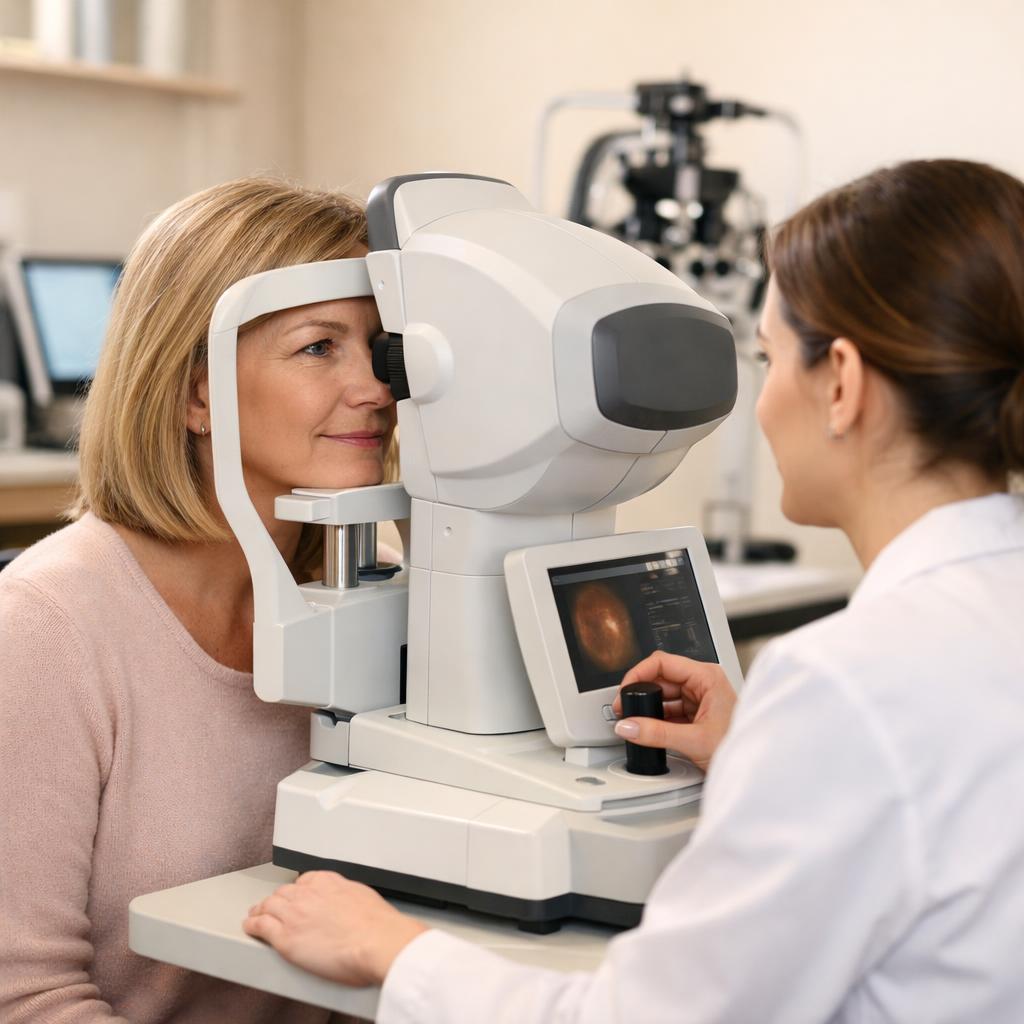
Macular Degeneration Exam in Tucson, AZ
Age-related macular degeneration, often called AMD, affects the macula—the part of the retina responsible for sharp central vision. A macular degeneration exam helps evaluate changes that may affect reading, driving, recognizing faces, and other detailed vision tasks.
At Tucson Eye Institute in Tucson, AZ, retina and macular health evaluations are designed to help patients understand their eye health in clear, practical terms.
What Is Macular Degeneration?
Macular degeneration is an eye condition that affects the macula, a small but important area in the center of the retina. The retina is the light-sensitive tissue at the back of the eye.
AMD is most often related to aging and may develop slowly, though some forms can change more quickly. It usually affects central vision rather than side vision.
Why AMD Screening Matters
AMD screening can help identify retinal changes before a person notices major vision problems. Early detection is important because eye doctors can monitor progression, discuss risk factors, and explain appropriate management options.
Screening does not guarantee prevention of vision changes, but it can support timely follow-up and informed decision-making.
Signs That May Involve Central Vision Loss
Possible symptoms of macular changes include:
- Blurred central vision
- Straight lines appearing wavy
- Trouble reading small print
- Needing brighter light for close work
- A dark or blurry spot in the center of vision
- Changes in one eye compared with the other
These symptoms can have more than one cause, so an eye exam is needed to better understand what may be happening.
What to Expect During a Macular Degeneration Exam
A macular degeneration exam may include:
- Review of medical and family history
- Visual acuity testing
- Dilated retinal exam
- Retinal imaging when appropriate
- Amsler grid check
- Discussion of risk factors and follow-up timing
Retinal imaging can help document the macula and monitor changes over time. The specific tests used depend on the patient’s eye health history and exam findings.
The Role of the Amsler Grid
An Amsler grid is a simple tool that can help detect changes in central vision, such as distortion or missing areas. It is not a replacement for a comprehensive eye exam, but it may be used as part of monitoring.
If lines appear wavy, blurred, or missing, an eye care professional should evaluate the change.
When to See an Eye Doctor
Schedule an eye exam if you notice new blurry central vision, distortion, trouble reading, or changes in one eye compared with the other.
Seek urgent evaluation for sudden vision loss, new flashes or floaters with a curtain-like shadow, severe eye pain, or a rapid change in vision. These symptoms may require prompt medical attention.
Retina & Macular Health Care in Tucson, AZ
Tucson Eye Institute provides retina and macular health evaluations for patients in Tucson, AZ. A maculardegeneration exam Tucson AZ patients receive may help assess the macula, document retinal findings, and guide appropriate next steps.
Educational discussions may include AMD screening, risk factors, monitoring, and when referral to a retina specialist may be appropriate.
Frequently Asked Questions
What is AMD screening?
AMD screening is an eye evaluation that looks for signs of age-related macular degeneration, usually through vision testing, a dilated retinal exam, and retinal imaging when appropriate.
Does macular degeneration cause total blindness?
Macular degeneration usually affects central vision, not side vision. It can make detailed tasks harder, but it does not typically cause complete loss of all vision.
What is an Amsler grid used for?
An Amsler grid is used to check central vision for distortion, missing areas, or changes that may need an eye exam.
When should I seek urgent eye care?
Seek urgent evaluation for sudden vision loss, severe eye pain, new flashes or floaters with a curtain-like shadow, or a rapid vision change.
Can a retina specialist help with macular degeneration?
A retina specialist may be involved when advanced testing, monitoring, or treatment of retinal disease is needed. Your eye doctor can discuss whether referral is appropriate.
Medical Disclaimer
This content is for educational purposes only and is not a diagnosis or personalized treatment advice. If you have vision changes or eye health concerns, contact a qualified eye care professional. Tucson Eye Institute in Tucson, AZ can provide an eye evaluation and guidance based on an in-person exam.
Author Bio
Reviewed by Dr. Zuraida Zainalabidin (Dr. Zie)
Sources
- American Academy of Ophthalmology (AAO)
- National Eye Institute (NEI)
- Mayo Clinic
- American Optometric Association (AOA)