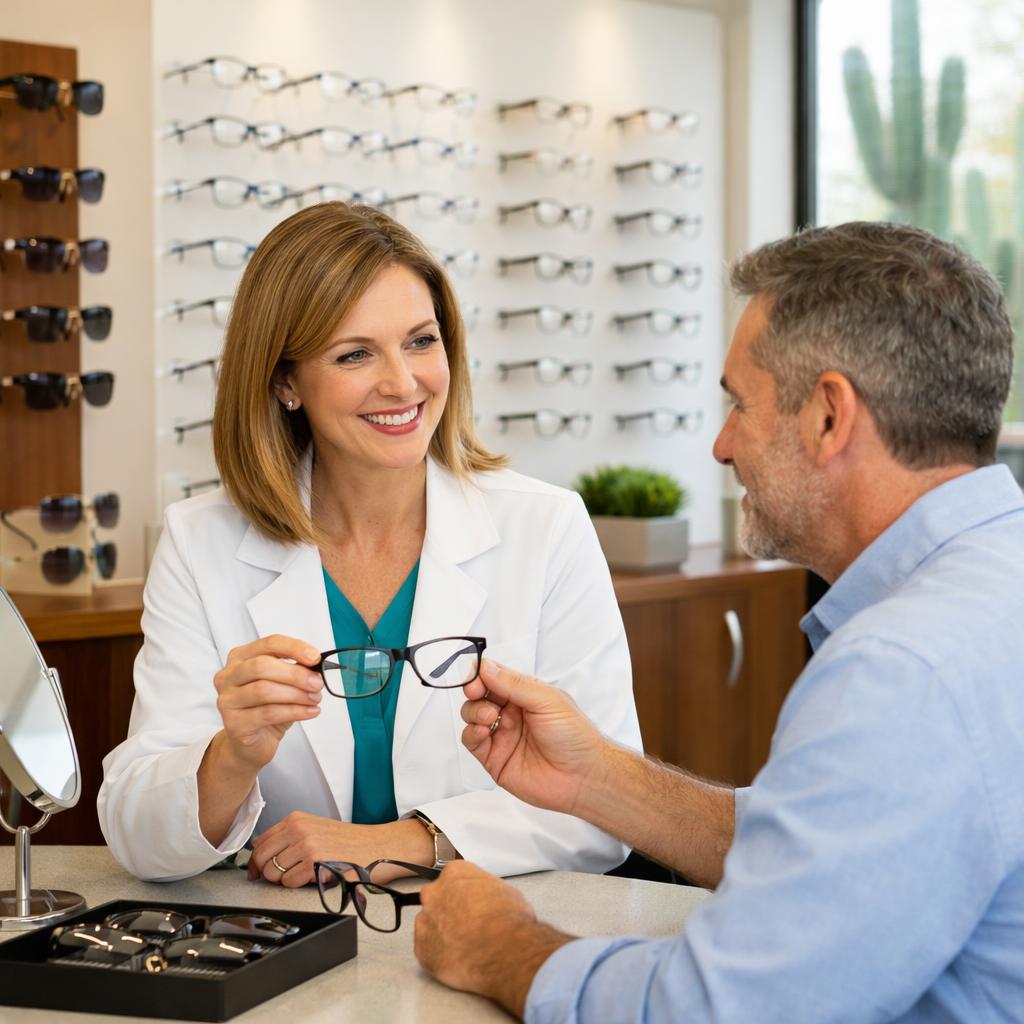
Glasses and Frames Tucson AZ: A Patient Guide to Choosing Eyewear
Choosing glasses is about more than picking a frame style. The right eyewear should support clear vision, fit comfortably, match your prescription needs, and work well for your daily routine in Tucson, AZ.
At Tucson Eye Institute, patients can learn about options such as eyeglasses prescription lenses, progressive lenses, blue light glasses, and designer frames in a professional eye care setting.
Why a Current Eyeglasses Prescription Matters
An eyeglasses prescription describes how lenses should be shaped to help focus light properly on the retina. A current prescription is important because vision can change over time due to age, eye conditions, medication changes, or general health.
If your glasses feel blurry, cause frequent squinting, or make reading and driving uncomfortable, it may be time to schedule a comprehensive eye exam rather than guessing at lens strength.
Choosing Frames That Fit Your Face and Lifestyle
Frames should feel secure without pinching the nose or temples. Proper frame fit helps keep lenses aligned with your eyes, which is especially important for stronger prescriptions and multifocal lenses.
In Tucson, AZ, many patients also consider lightweight materials, sun exposure, durability, and comfort for outdoor activities when choosing glasses and frames.
Lens Options: Single Vision, Bifocals, and Progressive Lenses
Single vision lenses correct one range of vision, such as distance or near vision. Bifocals include two prescription zones, typically for distance and reading.
Progressive lenses provide a gradual transition between distance, intermediate, and near vision without a visible line. Progressive lenses can be helpful for presbyopia, the age-related focusing change that often begins in the 40s, but they require accurate measurements and a short adjustment period for many wearers.
Blue Light Glasses and Digital Eye Comfort
Blue light glasses are designed to filter some blue-violet light from digital screens and indoor lighting. Evidence is mixed on whether blue light filtering alone prevents digital eye strain, but many people benefit from better screen habits, proper lighting, updated prescriptions, and regular breaks.
If screen use leads to headaches, eye fatigue, or blurred vision, an eye exam can help determine whether the issue is related to focusing, dryness, lens needs, or another cause.
Designer Frames and Practical Eyewear Features
Designer frames can offer a wide range of materials, shapes, colors, and finishes. Style matters, but practical features matter too.
Patients may want to ask about lens thickness, anti-reflective coatings, scratch resistance, UV protection, photochromic lenses, and prescription sunglasses. For Tucson’s bright desert environment, sun protection and glare reduction may be especially useful.
What to Expect During a Frames and Glasses Visit
A typical eyewear visit may include reviewing your eyeglasses prescription, discussing work and lifestyle needs, selecting frames, taking lens measurements, and choosing lens materials or coatings.
Accurate measurements help the lenses sit correctly in the frame. If you choose progressive lenses or higher-index lenses, fitting details become even more important for comfort and clarity.
When to See an Eye Doctor
Schedule a routine eye exam if your vision changes, your glasses no longer feel clear, you have frequent headaches with near work, or you are due for preventive eye care.
Seek urgent medical evaluation for sudden vision loss, new flashes or floaters with a curtain-like shadow, severe eye pain, eye injury, or sudden double vision. These symptoms can be associated with conditions that require prompt attention.
FAQ
How often should I update my eyeglasses prescription?
Many adults benefit from an eye exam every 1 to 2 years, but the right timing depends on age, eye health, medical history, and symptoms.
Are progressive lenses the same as bifocals?
No. Bifocals have two lens zones with a visible line, while progressive lenses gradually change power for distance, intermediate, and near vision.
Do blue light glasses prevent eye strain?
Blue light filtering may help some people feel more comfortable, but eye strain is often related to screen habits, dry eyes, lighting, or an outdated prescription.
Can I choose designer frames for a strong prescription?
Often, yes. Frame size, shape, and lens material can affect thickness and comfort, so professional frame fitting is important.
What should I bring when shopping for glasses?
Bring your current prescription, existing glasses, insurance or vision plan information if applicable, and notes about how you use your vision daily.
Medical Disclaimer
This content is for educational purposes only and does not provide diagnosis or personalized treatment advice. For questions about your vision, eyewear, or eye health, schedule an eye exam with a qualified eye care professional. Tucson Eye Institute in Tucson, AZ can provide evaluation and guidance based on an individual eye exam.
Author Bio
Reviewed by Dr. Zuraida Zainalabidin (Dr. Zie)
Sources
- American Academy of Ophthalmology (AAO)
- American Optometric Association (AOA)
- National Eye Institute (NEI)
- Mayo Clinic
- Centers for Disease Control and Prevention (CDC)